Stockpots and other large pots earn their place in the kitchen during the holidays, whether you are simmering stock for gravy, boiling pasta for a crowd, or blanching vegetables for a side dish. Choosing the right pot comes down to matching its size, material, and construction to the job you plan to do most often. This guide walks through what to look for, how to handle the weight of a full pot, and how to cool large batches of stock safely.
What a stockpot is for
A stockpot is a tall, straight-sided pot with a wide opening and a flat bottom, designed to hold large volumes of liquid. Its height helps reduce evaporation during long simmers, which makes it ideal for making stock, broth, and soup. The same shape works well for cooking pasta, boiling potatoes, steaming shellfish, or blanching vegetables in batches.
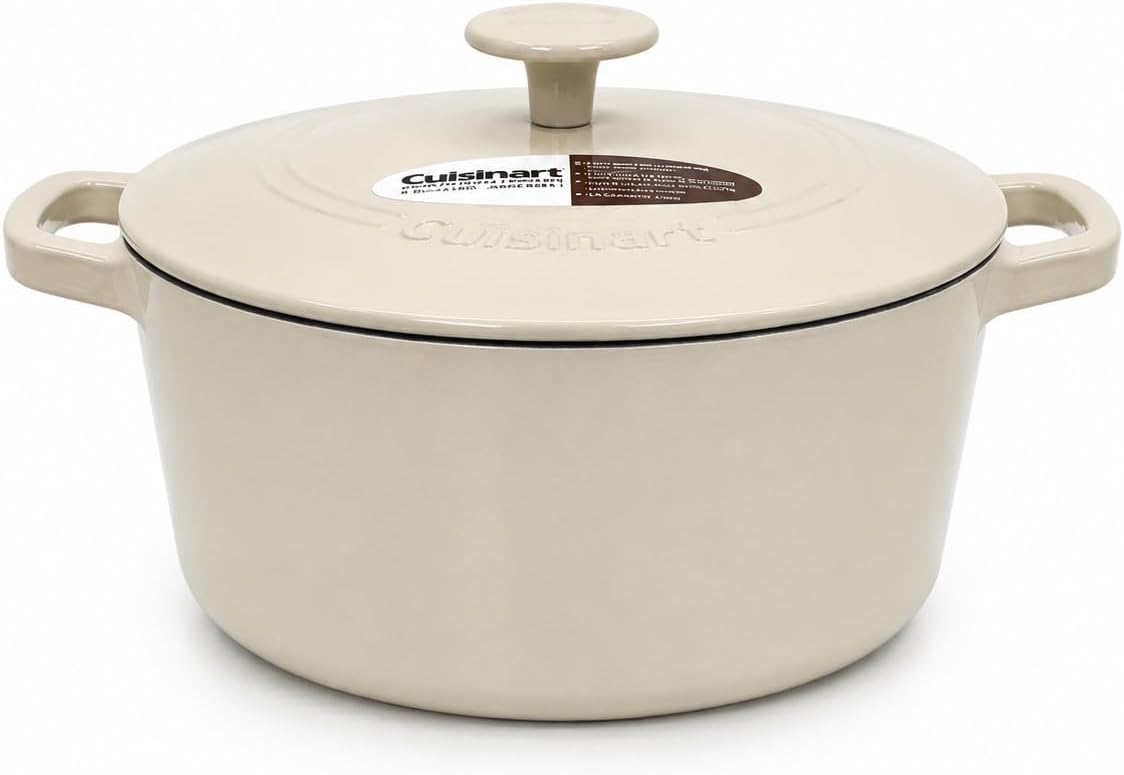
Because the pot is tall and narrow relative to its diameter, it is not the best choice for searing meat or reducing sauces quickly. A wider, heavier pot like a Dutch oven gives you more surface area for browning and evaporation. For holiday cooking, you will likely need both: a Dutch oven for braises and stovetop-to-oven dishes, and a stockpot for anything involving large amounts of liquid.
Large pots also come in handy for tasks beyond stock. You can use them to cook corn on the cob for a crowd, parboil potatoes before roasting, or hold hot water for warming plates. A good stockpot is one of the most versatile pieces of cookware you can own during the holiday season.
Sizes for families and crowds
Stockpot sizes are measured by volume, usually in quarts. Common sizes range from 6 to 20 quarts, with 8 and 12 quarts being the most popular for home kitchens. The right size depends on how many people you typically cook for and what you plan to make.
For a family of four to six, an 8-quart pot handles most jobs: a small turkey carcass for stock, a few pounds of pasta, or a batch of soup. If you cook for larger gatherings or like to make stock in big batches, a 12-quart pot gives you more room without becoming unwieldy. For very large crowds or whole turkey stock, a 16- or 20-quart pot works, but you need to think carefully about storage and stove fit.
Before buying, measure the distance between your stovetop and the range hood or cabinet above it. A tall 16-quart pot may not fit under a low hood. Also check the diameter of your largest burner; a very wide pot can overhang the burner, which leads to uneven heating and wasted energy. A common rule of thumb is to fill a stockpot no more than two-thirds full to allow for bubbling and stirring without boiling over.
| Pot size | Best for | Typical servings |
|---|---|---|
| 6 to 8 quarts | Family meals, small batches of stock, soup, pasta | 4 to 6 people |
| 10 to 12 quarts | Larger gatherings, turkey stock, big pasta pots | 8 to 12 people |
| 16 to 20 quarts | Very large crowds, whole turkey stock, canning | 12 or more people |
If you are unsure, an 8-quart pot is a safe starting point for most holiday meals. You can always make stock in two batches if needed. A 12-quart pot is worth the extra cabinet space if you host regularly or prefer to make stock once and freeze it.
Materials and bottoms
The material of a stockpot affects how it heats, how heavy it is, and how easy it is to clean. Stainless steel is the most common choice because it is durable, non-reactive, and works on all cooktops, including induction. The main drawback is that stainless steel alone does not conduct heat evenly, so most quality pots have an encapsulated base.
An encapsulated base means the pot has a layer of aluminum or copper sandwiched between layers of stainless steel at the bottom. This construction spreads heat across the base and prevents hot spots that can scorch soup or stock. Look for pots labeled as having a fully clad or encapsulated bottom; the thicker the base, the more even the heating, but also the heavier the pot.
Aluminum stockpots are lighter and heat quickly, but they can react with acidic foods like tomatoes, giving them a metallic taste. Anodized aluminum is safer and more durable, but it is still not as sturdy as stainless steel. Enameled cast iron pots are excellent for even heat but are very heavy and expensive in large sizes, so they are less common as stockpots.
For most home cooks, a stainless steel pot with a thick encapsulated base is the best balance of performance, weight, and durability. It will not react with food, it cleans up well, and it can go in the dishwasher, though hand washing is gentler on the exterior.
When you shop, look for a pot with a base that feels thick and heavy for its size. A flimsy, thin bottom will heat unevenly and is more likely to scorch. Also consider whether the pot is compatible with your cooktop; most stainless steel pots with encapsulated bases work on induction, but check the manufacturer’s specifications if you have an induction range.
Lids, handles and weight
A tight-fitting lid is essential for a stockpot. It traps heat and moisture, which speeds up cooking and reduces evaporation. Look for a lid that sits snugly on the rim with no gaps. Glass lids let you check on the pot without lifting the lid, but metal lids are more durable and often seal better. Some lids have a small vent hole to release steam, which helps prevent boil-overs.
Handles matter more than most people realize, especially when the pot is full. A stockpot full of liquid can weigh 20 pounds or more, so handles need to be sturdy, comfortable, and securely attached. Look for two loop handles on opposite sides of the pot, not a single long handle. The loops should be large enough to grip with oven mitts and positioned so the pot balances when lifted.
Weight is a practical concern. A heavy pot with a thick base is stable and heats evenly, but it is harder to lift and pour. Consider your own strength and how you will use the pot. If you plan to carry a full pot to the sink to drain pasta, a lighter pot may be safer. If you mostly cook on the stovetop and ladle out liquid, a heavier pot is fine.
Some large stockpots come with a straining lid or a steamer insert. A straining lid has holes that let you pour off liquid while holding back solids, which is handy for draining pasta or blanched vegetables. A steamer insert fits inside the pot and lets you cook vegetables above simmering liquid. These features add versatility, but they are not essential if you already own a colander or strainer.
When you lift a full pot, always use both hands and keep your back straight. Do not try to carry more than you can manage comfortably. If a pot is too heavy to lift safely, use a ladle to transfer liquid in smaller amounts, or set the pot on a heatproof surface near the sink before draining.
Making and cooling stock safely
Making stock in a large pot is straightforward: cover bones, vegetables, and aromatics with cold water, bring to a simmer, and cook for several hours. Skim off any foam that rises to the surface during the first hour. Keep the pot at a gentle simmer, not a rolling boil, to keep the stock clear and avoid cloudiness.
The real challenge with large batches of stock is cooling it safely. Food safety codes for restaurants call for cooling hot food to 70°F within two hours and to 41°F or below within four more hours, and the same idea applies at home: get it cold fast. Placing a huge pot of hot stock directly in the refrigerator is not safe, because the center of the liquid stays warm for too long, and the heat can raise the temperature of other foods in the fridge.
The safest way to cool a large batch is to divide it into smaller, shallow containers. Pour the stock into several containers so the depth is no more than a few inches. This increases the surface area and allows heat to escape quickly. You can use metal bowls, glass measuring cups, or plastic food storage containers. You do not need to wait for it to reach room temperature: refrigerate the shallow containers with the lids ajar, then cover them once the stock is cold.
If you need to cool stock even faster, set the container in an ice water bath. Fill a sink or a large bowl with ice and cold water, then place the container of stock in the bath. Stir the stock occasionally to help it cool evenly. Once the stock has cooled, move it to the refrigerator.
For long-term storage, stock freezes well. Pour cooled stock into freezer-safe containers, leaving headroom for expansion. You can also freeze stock in ice cube trays for small portions, or in zip-top bags laid flat to save space. Label each container with the date so you know how long it has been stored. The USDA notes that properly stored stock can be kept in the refrigerator for a few days or frozen for several months; check their leftovers and food safety guidance for specific timelines.
Never leave a pot of hot stock on the counter overnight to cool. This keeps it in the danger zone where bacteria multiply rapidly. If you are making stock late in the evening, divide it into shallow containers and use an ice bath to bring it down to a safe temperature before you go to bed.
When you are ready to strain the stock, a fine-mesh strainer lined with cheesecloth will catch small particles and give you a clear liquid. Fine-mesh strainers are also useful for straining sauces and removing impurities from cooking liquids.
Storage
Stockpots take up a lot of space, so think about where you will store one before you buy. Large pots can be stored in a lower cabinet, on an open shelf, or hanging from a pot rack if you have one. If you stack pots, place a soft cloth or paper towel between them to prevent scratches on the interior.
Keep the lid with the pot, either inverted on top or stored separately in a nearby spot. Some pots have a lid that fits inside the pot for compact storage, but this is not common in larger sizes. If you have limited cabinet space, consider a pot with removable handles, though these are less common and may not be as sturdy.
Store your stockpot clean and completely dry. Moisture left inside can cause spots on stainless steel or rust on exposed edges. If you use the pot infrequently, a quick wipe with a dry cloth before putting it away will keep it in good condition.
If you own multiple large pots, designate one as your primary stockpot and keep the others for specific jobs like pasta or blanching. This prevents you from having to move heavy pots around more than necessary during busy cooking sessions.
FAQ
What size stockpot should I buy for a family of four?
An 8-quart stockpot is a good size for a family of four. It holds enough liquid for a batch of soup, a few pounds of pasta, or stock from a small chicken or turkey carcass. If you often cook for guests, a 10- or 12-quart pot gives you more flexibility.
Can I use a stockpot on an induction cooktop?
Most stainless steel stockpots with an encapsulated base work on induction cooktops, but not all do. Check the manufacturer’s specifications or look for a label that says induction-compatible. Aluminum and copper pots without a magnetic base will not work on induction.
How do I cool a large pot of stock quickly?
Divide the hot stock into shallow containers so the liquid is no more than a few inches deep. Set the containers in an ice water bath and stir occasionally until the stock drops below 40 degrees Fahrenheit. Then cover and refrigerate or freeze.
Is a glass lid better than a metal lid on a stockpot?
Glass lids let you see inside without lifting the lid, which saves heat and steam. Metal lids are typically more durable and seal more tightly. Both work well; choose based on whether you prefer visibility or sturdiness.
Choosing the right stockpot is about matching the pot to your cooking style and the size of your holiday gatherings. A sturdy stainless steel pot with a thick encapsulated base, comfortable handles, and a tight-fitting lid will serve you well for years. Remember to cool large batches of stock in shallow containers, and store your pot clean and dry so it is ready for the next big meal.