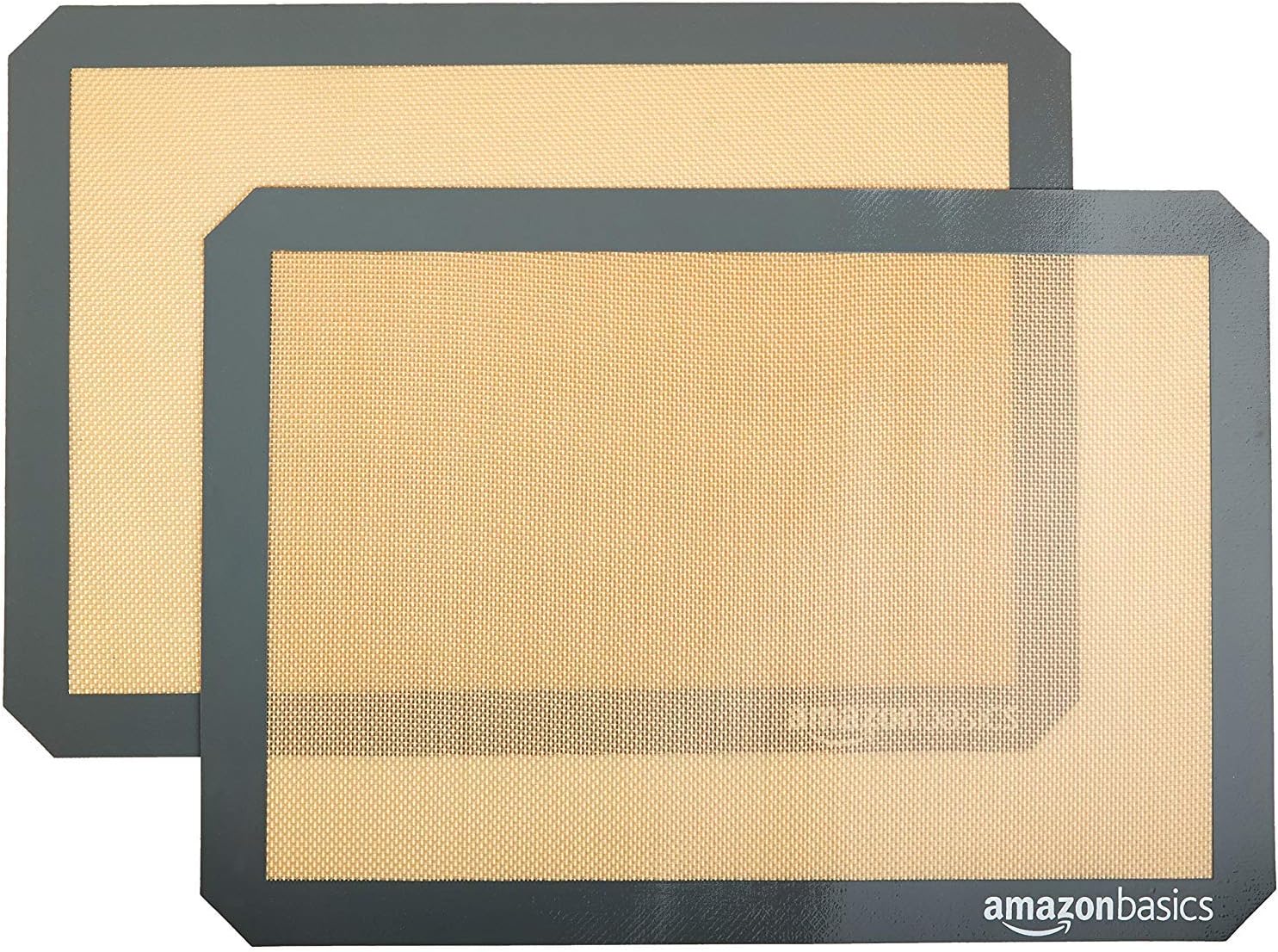
When you reach for a baking sheet liner, you typically choose between a silicone baking mat and parchment paper. Both prevent sticking and make cleanup easier, but they behave differently during baking. Understanding how each affects browning, cookie spread, heat limits, and daily care will help you decide which one to use for specific recipes. This article compares the two so you can make an informed choice for your holiday cookie baking and everyday cooking.
How Silicone Baking Mats and Parchment Paper Work
Silicone baking mats are flexible, reusable sheets made from food-grade silicone, often reinforced with fiberglass mesh. They create a non-stick surface without the need for grease or flour. Because they are reusable, they reduce waste and can last for many batches if cared for properly.
Parchment paper is a disposable paper product treated with a thin silicone coating that gives it non-stick properties. It is typically sold in rolls or precut sheets. Parchment paper is intended for single use, though some bakers reuse it one or two times if it is not heavily soiled. It can be trimmed to fit any pan size.
Both materials sit directly on the baking sheet and provide a barrier between the pan and the food. Neither requires greasing for most recipes, though some very sticky items (like meringues) may benefit from a light spray even on silicone.
Cookies and Browning: Key Differences
The biggest difference between silicone mats and parchment paper shows up in how cookies bake. Parchment paper is thin and allows heat to transfer through it more directly. This promotes even browning on the bottom of cookies and helps them spread to the intended diameter. For crisp cookies or those that rely on Maillard browning for flavor, parchment is often the better choice.
Silicone mats are thicker and act as an insulator. They slow the transfer of heat from the baking sheet to the dough. This can result in cookies that are slightly paler on the bottom and that spread less than they would on parchment. For soft, chewy cookies, this insulating effect can be desirable because it prevents the bottoms from over-baking before the centers set. However, if you want a uniformly golden-brown cookie, you may need to extend the baking time slightly when using a silicone mat.
Cookie spread is also affected. Because silicone mats reduce direct heat, butter in the dough may not melt as quickly, leading to less spread. If a recipe calls for parchment and you switch to a silicone mat, you might end up with thicker, puffier cookies. Adjusting the dough temperature or chilling the shaped cookies can help control spread regardless of the liner.
For holiday cookie baking, where you might be making several batches of different types, having both liners on hand lets you choose the one that matches the desired texture. Crisp sugar cookies and shortbread benefit from parchment, while soft gingerbread or chocolate crinkles do well on silicone.
When Parchment Paper Is the Better Choice
There are several situations where parchment paper outperforms silicone mats.
- Broiling: Parchment paper is not safe under the broiler. The intense direct heat can cause it to ignite or char. Silicone mats also should not be used under the broiler because the temperature exceeds their safe limit and can damage the mat. For broiling, use the bare pan or aluminum foil (check manufacturer guidance).
- High-heat roasting: Many parchment papers are safe up to about 425°F to 450°F, but you must check the package. Silicone mats typically have a maximum temperature around 450°F to 480°F. For roasting vegetables at 400°F or 425°F, either usually works; above that, check both ratings, and use a bare pan if neither covers the temperature.
- Cutting on the liner: Never cut food directly on a silicone baking mat. The knife can damage the silicone surface and create grooves where food can stick. Parchment paper can be cut on (though it will tear), so if you need to slice brownies or bars while they are still on the liner, parchment is the practical option.
- Acidic foods: Highly acidic ingredients like tomato sauce or citrus can sometimes cause discoloration or odor absorption in silicone mats over time. Parchment paper is disposable and unaffected by acidity.
- Messy, sticky items: For tasks like roasting sticky glazed chicken wings or making caramel, parchment paper can be thrown away after use. Silicone mats require thorough cleaning, and sticky residues can be difficult to remove.
Caring for Silicone Baking Mats
Proper care extends the life of silicone mats. After each use, wash the mat with warm, soapy water and a soft sponge. Avoid abrasive scrubbers or steel wool, which can scratch the surface. Most silicone mats are dishwasher safe, but check the manufacturer’s instructions. Placing them on the top rack away from the heating element is recommended.
To remove stubborn grease or baked-on residue, soak the mat in hot, soapy water for a few minutes before scrubbing. You can also use a paste of baking soda and water for gentle abrasion. Dry the mat thoroughly before storing. Roll it up loosely or lay it flat; folding can create creases that may cause uneven baking.
Never use sharp knives, pizza cutters, or pastry wheels on a silicone mat. The cuts will ruin the non-stick surface and may expose the fiberglass mesh inside. If you need to cut baked goods, transfer them to a cutting board first.
Store silicone mats away from direct sunlight and heat sources when not in use. With proper care, a high-quality mat can last for years.
Heat Limits and Safety
Both silicone mats and parchment paper have temperature limits that you must respect for safety and performance.
Parchment paper is generally safe up to 425°F to 450°F, but some brands are rated for 450°F or even 475°F. Always read the package. Never use parchment paper under the broiler or in direct contact with a heating element. If the paper extends above the pan edges, it can burn or catch fire. Trim it to fit or use the precut sheets that match your pan size.
Silicone baking mats typically have a maximum safe temperature of 450°F to 480°F. Do not use them under the broiler or on the stovetop. Exceeding the temperature limit can cause the silicone to degrade, emit fumes, or melt. The fiberglass reinforcement may also become exposed if the silicone breaks down. Always refer to the manufacturer’s instructions for your specific mat.
For most baking tasks, such as cookies at 350°F or sheet cakes at 350°F, both liners are well within their safe range. For high-heat roasting at 425°F or above, check your liner’s rating before you start.
When in doubt at high heat, use a bare baking sheet or aluminum foil.
Sizing Silicone Mats to Your Pans
Silicone baking mats come in standard sizes to fit common baking sheets. The most common sizes are half-sheet pan size (about 16.5 x 11.5 inches) and quarter-sheet pan size. Some mats are also available for jelly-roll pans or smaller toaster oven trays.
To get the best performance, choose a mat that matches your pan’s interior dimensions. A mat that is slightly smaller than the pan is fine; it will leave a small gap at the edges. A mat that is too large may curl up against the pan sides or overhang, which can cause uneven baking or make the mat hard to handle.
Do not trim a fiberglass-reinforced mat, because cutting exposes the mesh. Buy mats sized for your pans instead. For standard half-sheet pans, silicone baking mats are widely available in the correct dimensions.
Parchment paper is easier to size. You can cut a sheet from a roll to fit any pan, leaving a slight overhang to use as handles for lifting baked goods. Precut parchment sheets are convenient for standard half-sheet and quarter-sheet pans and eliminate the need for trimming.
When using a silicone mat on a pan with a rim, ensure the mat lies flat. If the mat is too large, it may buckle and create air pockets, leading to uneven baking. For pans that are not standard sizes, parchment paper is often the simpler choice.
FAQ
Can you cut food on a silicone baking mat?
No. Cutting directly on a silicone mat with a knife, pizza cutter, or pastry wheel will damage the surface. Always transfer baked goods to a cutting board before slicing.
Can you use parchment paper under the broiler?
No. Parchment paper is not safe under the broiler. The high heat can cause it to ignite. Use a bare pan or aluminum foil (following manufacturer instructions) for broiling.
How do you clean a silicone baking mat?
Wash with warm, soapy water and a soft sponge. Most mats are dishwasher safe on the top rack. Avoid abrasive scrubbers. For stuck-on residue, soak in hot water or use a baking soda paste.
Which is better for crispy cookies?
Parchment paper is better for crispy cookies because it allows more direct heat to reach the dough, promoting browning and spread. Silicone mats insulate, which can result in softer, paler bottoms.
Choosing between silicone baking mats and parchment paper depends on the recipe and your priorities. For everyday baking and soft cookies, silicone mats offer reusability and convenience. For crisp textures, high-heat tasks, or situations where you need to cut on the liner, parchment paper is the practical choice. Many home cooks keep both on hand, using each where it performs best. For more on the pans themselves, see our guide to baking sheets and sheet pans. And for seasonal baking projects, explore our collection of holiday cookie baking tools.