 By Emily Parker
Updated November 2026
A roast chicken roasting pan does two jobs: it holds the bird steady and it catches the drippings you’ll use for gravy. Choose a pan sized for your bird, lift the chicken off the bottom with a rack, and roast until the thickest part of the thigh reads 165°F. Following those steps gives you crisp skin and meat that stays moist.
Choose the Right Pan and Rack
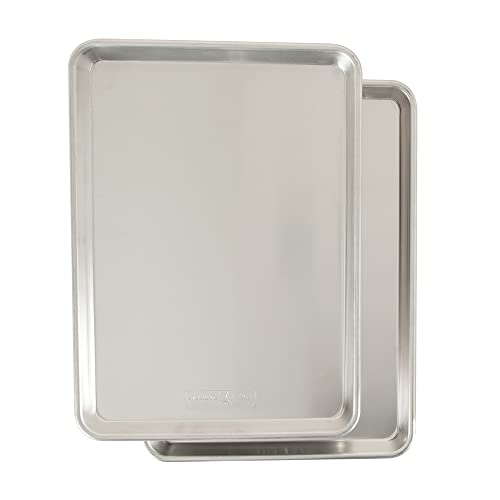
For a 4- to 5-pound chicken, a pan roughly 13 by 9 inches works well. Leave at least an inch of space between the bird and the pan walls so hot air can circulate. Heavy-gauge stainless steel or enameled cast iron holds heat evenly and resists warping. Avoid thin, flimsy pans that scorch the drippings.
Shopping for one? See our guide: 6 Best All Clad Roasting Pans with Rack for Turkey and Roasts (2026).
A rack matters more than most people expect. Without one, the bottom of the chicken sits in its own juices and the skin there turns soggy. A V-shaped rack or a simple wire rack keeps air moving underneath. If your pan came without one, a basic oven-safe wire rack that fits inside works just as well. For a closer look at rack options, see Roasting Pan for Whole Chicken: How to Choose, Use and Clean One (7 Steps).
Prepare the Chicken
- Thaw the chicken fully in the refrigerator, allowing roughly one day per 4 to 5 pounds. Pat it dry with paper towels, inside and out.
- Salt the skin and the cavity at least 1 hour ahead, or overnight uncovered in the refrigerator, for better browning.
- Tuck the wings behind the back and tie the legs loosely with kitchen twine.
- Rub the skin with softened butter or oil, and season with pepper and herbs.
- Set the chicken breast side up on the rack and let it sit at room temperature for 30 minutes before it goes in the oven.
Roast Chicken in the Pan
Preheat the oven to 425°F, with the rack in the lower third. Roast the chicken for about 15 minutes at this heat to start the skin browning, then reduce the temperature to 375°F and continue roasting. A 4- to 5-pound bird usually needs 1 to 1¼ hours in total, but size, oven accuracy and starting temperature all change the timing.
Check doneness with an instant-read thermometer in the thickest part of the thigh, away from the bone. Pull the chicken at 165°F. Let it rest for 15 to 20 minutes before carving so the juices settle back into the meat.
Turn the Drippings Into Gravy
Pour off most of the fat from the pan and set the browned bits in place. Place the pan over medium heat on the stovetop, add a splash of stock or wine, and scrape up the browned bits. Whisk in a little flour or cornstarch, simmer until thickened, and season to taste.
Common Mistakes
- Skipping the rack, which leaves the underside of the bird soggy.
- Crowding the pan with vegetables that release steam and prevent browning.
- Carving right out of the oven, which lets juices run onto the board.
- Relying on cooking time alone instead of checking the internal temperature.
- Using a pan with a lid during the whole roast, which traps moisture and softens the skin.
Recommended Gear
- Heavy-gauge roasting pan with a rack: Sturdy walls and a flat base keep the chicken stable and reduce warping at high heat. View on Amazon
- Instant-read thermometer: A fast reading lets you confirm 165°F in the thigh without guessing. View on Amazon
- Kitchen twine: Tying the legs and tucking the wings keeps the bird compact so it cooks evenly. View on Amazon
FAQ
Do I need a rack in a roasting pan for chicken?
A rack is strongly recommended. It lifts the bird off the pan floor so hot air reaches the underside and the skin stays crisp. Without one, the bottom will steam in its juices.
What temperature should roast chicken reach?
Check the thickest part of the thigh with an instant-read thermometer. The USDA recommends 165°F for poultry, and you should pull the bird once it reaches that point. You may also like Best Roasting Pan Chicken: 7 Factors and Picks for Juicy Results.
Can I use a roasting pan with a lid for chicken?
You can, but a lid traps steam and softens the skin. Leave it off for most of the roast, and only cover the pan loosely if the breast is browning too fast near the end.
Conclusion
A well-chosen pan, a rack and a reliable thermometer are the core of a good roast chicken. Dry and season the bird ahead of time, roast at a high start and finish at a moderate heat, and rest it before carving. Keep an eye on the thigh temperature and the drippings will take care of your gravy.
Related reading
- Substitute for Roasting Pan: 6 Options That Work for Turkey and Roasts
- Roasting Pan for Rib Roast: A Practical Guide (2026)
- Roasting Pan Cast Iron: 7 Best Picks for Turkey and Roasts in 2026
Ready to choose one?
About Emily Parker
Emily Parker is part of our editorial team and reviews and edits our holiday cooking & baking guides, checking product details against manufacturer specifications and owner feedback.