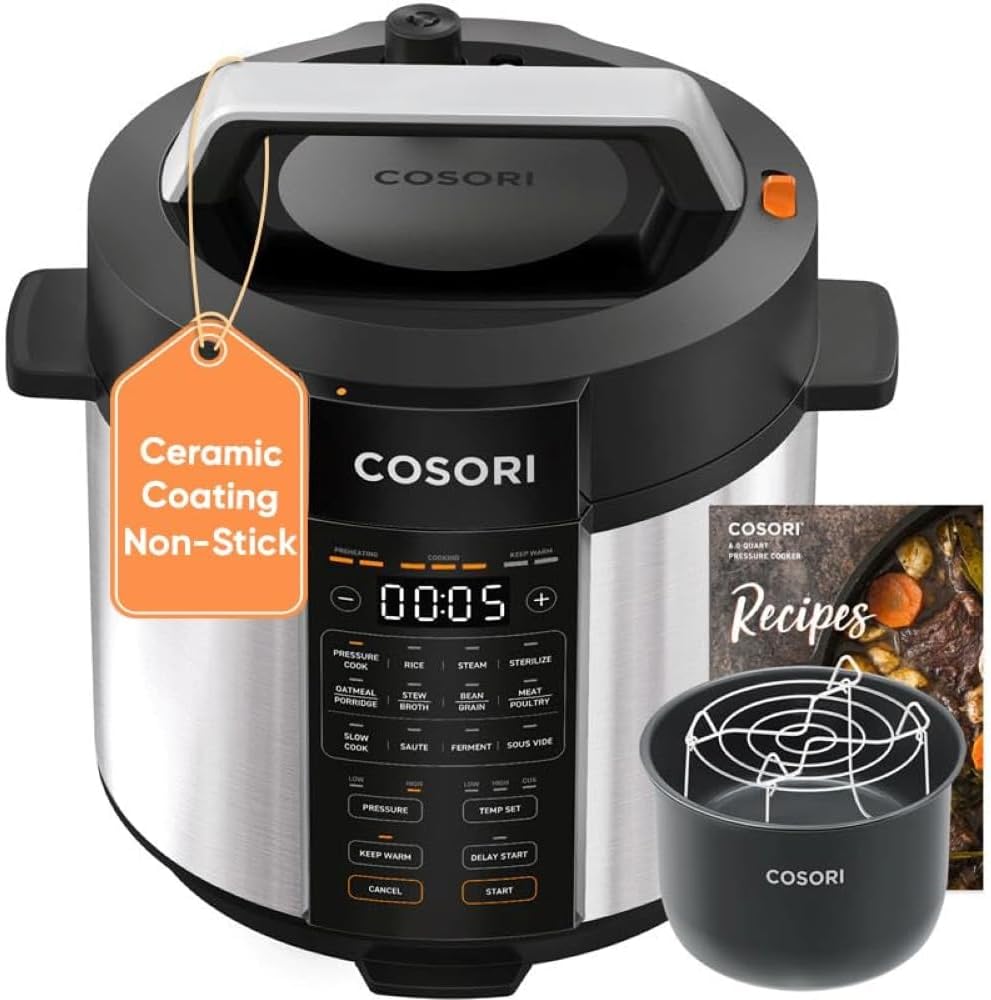
Choosing a rice cooker starts with understanding the three main types, what the included cup really measures, and which settings actually matter for the way you cook. This guide walks you through each decision point so you can pick a model that fits your kitchen routine, your counter space, and your expectations for fluffy, consistent rice every time.
Types of Rice Cookers
Rice cookers fall into three broad categories based on how they control heat and timing. Each type suits a different level of convenience and precision.
On/Off (Basic) Rice Cookers
The simplest design uses a mechanical thermostat. When the pot reaches a temperature above the boiling point of water (meaning all the water has been absorbed or evaporated), the cooker clicks from “cook” to “warm.” You cannot adjust the cooking curve for different types of rice. These models are inexpensive, durable, and fine for plain white or jasmine rice. They do not handle brown rice, sushi rice, or mixed grains as well because those need a longer or more gradual cooking cycle.
Fuzzy Logic Rice Cookers
Fuzzy logic models use a microcomputer that monitors temperature and adjusts the heating profile in real time. The term “fuzzy logic” refers to the control system’s ability to make nuanced adjustments rather than just on/off decisions. These cookers typically offer multiple menu options such as white rice, brown rice, sushi rice, porridge, and quick cook. They can also adjust for small variations in water volume. For most home cooks, a fuzzy logic rice cooker provides the best balance of versatility and price.
Induction Heating (IH) Rice Cookers
Induction heating uses an electromagnetic coil to heat the entire inner pot evenly, rather than a heating element at the base. This allows precise temperature control across the full cooking cycle, including a controlled soaking and steaming phase. IH models are the most expensive and produce the most consistent results, especially for short-grain sushi rice, brown rice, and mixed grains. They often include multiple settings and a more powerful keep-warm function. If you cook rice several times a week and want the best texture, an IH cooker is worth considering.
When you are ready to shop, you can browse a wide selection of rice cookers to compare features across these three types.
What the Cup Size Means
Every rice cooker comes with a plastic measuring cup, but that cup is not a standard US cup. The “rice cup” typically holds 180 milliliters, which is about 3/4 of a US cup or 6 fluid ounces. One level rice cup of uncooked rice yields roughly two servings of cooked rice, depending on the variety.
This distinction matters because the water lines inside the inner pot correspond to that specific cup. If you use a standard US measuring cup to scoop rice, the water levels on the pot will be off, and you will end up with rice that is too dry or too wet. Always use the included cup for measuring rice, then add water to the corresponding line inside the pot. A common rule of thumb for white rice is to use a water level that reaches the first knuckle of your index finger when the tip of your finger rests on the surface of the rice, but the water lines on the pot are more reliable once you learn them.
Brown rice usually has its own, higher water line; check the manual for your model because the ratio varies.
Settings That Matter
Not all rice cookers offer the same menu options. Here are the settings worth looking for depending on what you cook.
| Setting | What It Does | Best For |
|---|---|---|
| White Rice | Standard cycle | Long-grain, jasmine, basmati |
| Brown Rice | Longer cycle with extended soaking and steaming | Brown, wild rice, mixed grains |
| Sushi Rice | Cycle tuned for short-grain rice | Short-grain Japanese rice |
| Quick Cook | Shorter cycle, slightly higher heat | When you are short on time |
| Porridge/Gruel | Long, gentle simmer | Congee, oatmeal, rice pudding |
| Steam | Uses residual heat or a separate steaming tray | Vegetables, dumplings, fish |
| Keep Warm | Maintains temperature above 140°F | Holding rice after cooking |
Some fuzzy logic and IH models also include a “GABA” or “germinated brown rice” setting, which soaks the rice at a specific temperature to activate enzymes before cooking. This produces a softer, slightly sweeter brown rice. If you eat brown rice often, this setting is a nice upgrade.
A delay timer lets you set the cooker to finish cooking at a specific time. This is convenient for busy schedules but requires attention to food safety (see the next section).
Keep-Warm and Rice Safety
Cooked rice can harbor Bacillus cereus, a spore-forming bacterium that survives cooking. If rice sits at room temperature for too long, the spores can germinate and produce toxins that cause food poisoning. The USDA danger zone guidance states that perishable foods should not be left between 40°F and 140°F for more than two hours.
The keep-warm function on a rice cooker is designed to hold rice at 140°F or above. Check the manual for how long your model recommends keeping rice warm; the rice gradually dries out and the texture degrades. After that, it is best to refrigerate leftovers promptly.
To store leftover rice safely, transfer it to shallow containers and refrigerate within two hours of cooking (sooner if the room is warm). The USDA leftovers and food safety guidelines recommend eating refrigerated rice within three to four days. Reheat it thoroughly to 165°F, adding a tablespoon of water per cup to restore moisture. Never reheat rice in the rice cooker’s keep-warm setting if it has been refrigerated; use a microwave, stovetop, or oven instead.
If your rice cooker has a delay timer, be cautious. Do not let uncooked rice and water sit in the pot for more than a few hours before cooking begins, especially in warm weather. The water can become a breeding ground for bacteria. Never add meat, dairy, or other perishable ingredients to a delayed cycle.
Other Things It Can Cook
A rice cooker is not a one-trick appliance. Many models can handle a range of foods, though results vary by type and power.
Grains and Legumes
Quinoa, farro, barley, millet, and steel-cut oats all cook well in a rice cooker. Use the white rice or porridge setting depending on the grain. Lentils and split peas also work, but you may need to adjust the water ratio and check for doneness manually. The porridge setting is ideal for steel-cut oats because it provides the longer, gentler heat they need.
Steamed Vegetables and Dumplings
Most rice cookers include a steaming basket or tray. You can steam broccoli, carrots, green beans, dumplings, and even fish while rice cooks below. For best results, add the vegetables during the last 10 minutes of the rice cycle so they do not overcook.
Soups, Stews, and Congee
The porridge setting can handle congee (rice porridge) and thin soups, but the cooker is not designed for large volumes of liquid. Keep the fill line well below the maximum mark to avoid boil-overs. If your cooker has a “slow cook” setting, you can use it for simple stews, though a dedicated slow cooker for holiday sides will give you more control over temperature and cooking time for larger batches.
One-Pot Meals
You can cook rice with aromatics, protein, and vegetables all in one pot. Sauté onions and garlic in the pot first (if your model has a sauté function), then add rice, liquid, and small pieces of protein only if your manual includes recipes like that, and check meat with a thermometer before serving. This works best with fuzzy logic or IH models that have a sauté or simmer setting. For holiday side dishes, a pressure cooker for holiday sides may be more versatile for braised meats and quick-cooking grains.
Cleaning
Regular cleaning keeps your rice cooker performing well and prevents off-flavors in future batches.
After Each Use
- Unplug the cooker and let it cool completely.
- Remove the inner pot and wash it with warm, soapy water using a non-abrasive sponge. Most inner pots have a non-stick coating, so avoid steel wool or harsh scrubbers.
- Rinse and dry the pot thoroughly before returning it to the base.
- Wipe the exterior of the cooker with a damp cloth. Do not immerse the base in water.
Lid and Steam Vent
Many models have a removable inner lid or steam vent cover. Take these off and wash them in warm, soapy water. Starch residue can build up in the vent and cause the lid to stick or the steam to escape unevenly. Dry all parts completely before reassembling.
Condensation Collector
Some rice cookers have a small plastic tray or cup that catches condensation from the lid. Empty and rinse this after every use. If left unattended, it can develop mold or a sour smell.
Deep Cleaning Tips
- Once a month, clean the inner pot with a paste of baking soda and water to remove any stubborn starch film. Rinse thoroughly.
- If the heating plate or sensor area on the base gets food residue, wipe it gently with a damp cloth. Never pour water directly onto the base.
- For the rice paddle, wash it by hand or in the dishwasher if it is marked dishwasher-safe. A rice paddle is the best tool for serving rice without scratching the non-stick pot.
Always refer to your manufacturer’s instructions for specific cleaning guidance, especially for the lid gasket and steam valve on fuzzy logic and IH models.
FAQ
Can I cook brown rice in a basic on/off rice cooker?
Yes, but the results are often uneven. Basic cookers do not adjust the cooking curve for brown rice’s longer absorption time, so you may end up with undercooked or scorched rice. A fuzzy logic or IH model handles brown rice much more reliably.
How long can I leave rice on keep-warm?
Check your manual; models differ. The longer rice sits, the more it dries out. For food safety, the keep-warm function must hold the rice above 140°F. If you are unsure about your model’s performance, check the manual or use a food thermometer.
Do I need to wash rice before putting it in the cooker?
Yes, for most types of rice. Rinsing removes excess starch that can cause gummy or sticky rice. Place the rice in the inner pot, add cold water, swirl with your hand, and pour off the cloudy water. Repeat two to three times until the water runs mostly clear. For enriched white rice, rinsing removes some added nutrients, so check the package if that is a concern. For sushi rice, rinsing is essential to achieve the proper texture.
Can I cook oatmeal or quinoa in any rice cooker?
Yes, but use the correct setting. Quinoa cooks well on the white rice or quick cook setting with a 1:2 ratio of quinoa to water. Steel-cut oats need the porridge setting and a 1:3 ratio. Flaked or rolled oats cook quickly and may bubble over, so keep an eye on the pot and use a smaller volume.
Choosing the right rice cooker comes down to how often you cook rice, which varieties you prefer, and whether you want the convenience of programmable settings. A basic on/off model works fine for occasional white rice, while a fuzzy logic or induction heating cooker gives you the flexibility to cook brown rice, grains, and one-pot meals with consistent results. Pair your cooker with a good rice paddle and a clean storage routine, and you will get years of reliable service from a relatively simple appliance.