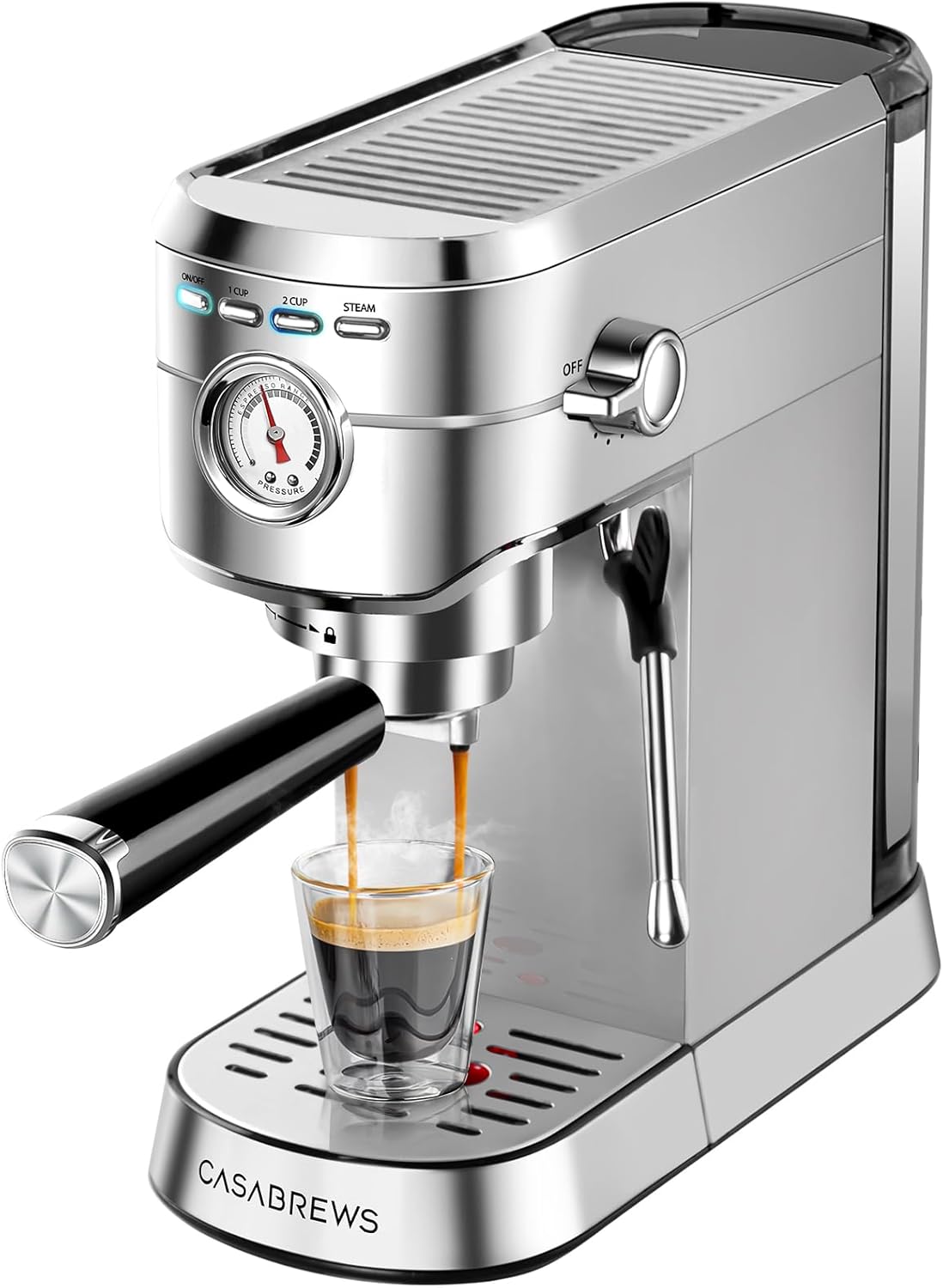
Choosing a home espresso machine means matching your coffee habits to the right type of machine, grinder setup, and maintenance routine. This guide walks through the main machine types, what to expect from a built-in versus separate grinder, how steaming milk works, and the simple facts about pressure and water care so you can decide what fits your kitchen and your morning routine.
Types of Espresso Machines
Home espresso machines fall into several categories based on how much control you want and how much effort you are willing to put into each shot. Understanding the differences helps you pick a machine that matches your skill level and daily habits.
Manual lever machines
Manual lever machines require you to pull a lever to generate the pressure needed for extraction. You control the pressure by how firmly and quickly you push the lever, which gives you direct feedback from the coffee puck. These machines have no pump or electronics, so they rely entirely on your technique. Many enthusiasts appreciate the hands-on process and the ability to adjust pressure in real time, but the learning curve is steep. You need patience and practice to produce consistent shots. Manual lever machines also tend to be smaller and quieter than pump-driven models.
Semi-automatic machines
Semi-automatic machines are the most common type for home use. They use an electric pump to push water through the coffee at a consistent pressure, and you control the shot by starting and stopping the pump with a button or switch. Grinding, dosing, and tamping are still done by hand, which gives you control over the variables that affect flavor. Semi-automatic machines offer a good balance of control and convenience, and they are widely available in a range of sizes and price points. Many models include a steam wand for milk, making them versatile for drinks like lattes and cappuccinos. If you are looking for a machine that lets you learn the craft without fully automating the process, semi-automatic espresso machines are a solid choice.
Super-automatic machines
Super-automatic machines handle nearly every step automatically. They grind the beans, dose the coffee, tamp it, pull the shot, and often steam milk with the push of a button. Some models also include a built-in bean hopper and a milk reservoir or steam wand that self-cleans. These machines are the most convenient option, especially for households where multiple people want espresso drinks quickly. The trade-off is less control over the grind and dose, and repairs can be more complex because of the many moving parts. Super-automatic machines also take up more counter space and are generally more expensive than semi-automatic models.
Capsule machines
Capsule machines use pre-filled pods or capsules to produce espresso with minimal effort. You insert a capsule, press a button, and the machine handles the rest. These machines are compact, easy to clean, and require almost no learning curve. The downside is that you are limited to the coffee blends offered by the capsule manufacturer, and the cost per cup is higher than using whole beans. Capsule machines are a practical option if speed and simplicity matter most, but they do not offer the same freshness or customization as machines that use freshly ground coffee.
Grinder: Built-In or Separate
The grinder is one of the most important parts of an espresso setup because the grind size directly affects how water flows through the coffee. Fine, uniform grounds are essential for proper extraction, and not all grinders can deliver that consistency.
Built-in grinders
Many super-automatic and some semi-automatic machines include a built-in grinder. A built-in grinder saves counter space and simplifies your workflow because you do not need a separate appliance. You load whole beans into a hopper, and the machine grinds them immediately before brewing. This keeps the coffee fresh and eliminates the need to store ground coffee. However, built-in grinders are often less adjustable than separate grinders, and they can be harder to clean. If the grinder breaks, you may need to service the entire machine. For a deeper look at grinder types, see our guide on blade versus burr coffee grinders.
Separate burr grinders
A separate burr grinder gives you more control over grind size and consistency. Burr grinders crush the coffee between two abrasive surfaces, producing uniform particles that are ideal for espresso. With a separate grinder, you can adjust the grind setting precisely and switch between different beans or brew methods more easily. Cleaning is also simpler because you can access the burrs directly. The main drawback is that you need counter space for two appliances instead of one, and you add an extra step to your routine. For espresso, a quality burr grinder is widely considered essential for achieving good results, especially with semi-automatic or manual machines.
What to consider
If you choose a machine with a built-in grinder, look for one that offers enough grind settings to dial in your shots. If you prefer a separate grinder, make sure it is designed for espresso, which requires very fine and consistent grounds. A common rule of thumb is that the grinder is just as important as the machine itself. Skimping on the grinder often leads to frustrating results, regardless of how expensive the espresso machine is.
Steaming Milk
A steam wand is what turns plain milk into the velvety microfoam used in lattes, cappuccinos, and flat whites. Not all steam wands perform the same way, and the type of wand affects how easy it is to get good results.
Types of steam wands
Most semi-automatic and super-automatic machines include a steam wand. Basic wands have a single hole or a simple tip that injects steam into the milk. More advanced wands have multiple holes or a specially designed tip that creates finer bubbles and more consistent foam. Some high-end machines offer a “dry” steam feature that produces steam with less moisture, which helps create denser microfoam.
Manual versus automatic steaming
On a manual steam wand, you control the position of the wand in the milk and the timing. This takes practice but gives you full control over the texture and temperature. Automatic steam wands, found on many super-automatic machines, handle the process for you. You place a pitcher under the wand and press a button, and the machine stops when the milk reaches the right temperature. Automatic wands are convenient but offer less room for adjustment.
For more detail on technique, see our guide on how to froth milk at home for coffee drinks. A good milk frothing pitcher with a narrow spout and clear measurement markings makes the process easier, especially when you are learning.
Cleaning the steam wand
After each use, you should purge the wand by releasing steam for a few seconds to clear milk residue from the tip. Wipe the wand with a damp cloth immediately. If milk dries inside the wand, it can clog the holes and affect performance. Many machines include a cleaning cycle or a removable tip that makes this easier.
Pressure and Temperature
Pressure and temperature are the two main variables that determine how well your espresso extracts. Understanding them in simple terms helps you evaluate machine specifications and troubleshoot your shots.
Pressure
Espresso is brewed by forcing hot water through finely ground coffee under pressure. The standard pressure used in commercial espresso machines is around 9 bars. Many home machines advertise higher pressure ratings, but what matters most is that the machine can maintain a stable pressure at the group head during the entire shot. Some machines use a pump that can deliver higher pressure, but a pressure regulation valve or a pre-infusion feature helps ensure the water reaches the coffee at a consistent level. A machine that claims very high pressure is not necessarily better; steady pressure in the proper range is what produces good extraction. Look for machines that describe their pressure system clearly rather than focusing on a single number.
Temperature
Water temperature during extraction should be hot enough to dissolve coffee solids but not so hot that it scalds the grounds. Most home espresso machines use a thermoblock or a boiler to heat water. Thermoblock heaters heat water on demand and are common in smaller machines, while boilers maintain a reservoir of hot water and provide more temperature stability. Some machines offer adjustable temperature settings, which can be useful for fine-tuning extraction with different beans. A machine that heats up quickly and maintains a stable temperature throughout the shot will give you more consistent results.
Pre-infusion
Pre-infusion is a feature that wets the coffee puck with low pressure before the full extraction pressure kicks in. This helps the grounds expand evenly and reduces channeling, where water finds a path through the puck and under-extracts part of the coffee. Many higher-end home machines include a pre-infusion cycle, either automatic or controlled by the user. It is a useful feature for improving shot consistency.
Water and Descaling
The water you use has a big impact on your espresso machine’s performance and lifespan. Mineral deposits from hard water can build up inside the boiler, pipes, and valves, eventually causing blockages or heating problems.
Water quality
Using filtered or bottled water with low mineral content reduces scale buildup and can improve the taste of your coffee. Tap water that is very hard may require a water softener or a descaling routine every few months. Some machines include a built-in water filter or a water hardness setting that adjusts the machine’s descaling reminder. Check your machine’s manual for the recommended water type.
Descaling
Descaling removes mineral deposits from the internal components. Most manufacturers recommend descaling every few months, depending on water hardness and how often you use the machine. Descaling solutions are available as liquids or powders, and some machines have a dedicated descaling cycle that automates the process. Using vinegar is not recommended for most modern machines because it can damage seals and leave a lingering taste. Always follow the manufacturer’s instructions for the correct descaling product and procedure.
Daily and weekly care
Empty and rinse the drip tray and water tank regularly. Wipe the group head and shower screen after each use to remove coffee residue. Backflushing, if your machine supports it, helps clean the internal brew path. A machine that is well cared for will last longer and produce better-tasting espresso.
Space and Learning Curve
Before buying an espresso machine, consider where it will live on your counter and how much time you are willing to spend learning the process.
Counter space
Espresso machines vary widely in size. Manual lever machines and capsule machines tend to be compact, while semi-automatic and super-automatic machines can be quite large. Measure the space where you plan to put the machine, including clearance above for filling the water tank and accessing the bean hopper. A machine with a built-in grinder takes up less overall footprint than a separate grinder and machine combo, but the machine itself is usually taller. Leave room on both sides for ventilation and for reaching the steam wand.
Learning curve
The learning curve depends on the type of machine you choose. Capsule machines require almost no learning. Super-automatic machines are nearly as simple, though you may need to adjust grind and dose settings initially. Semi-automatic machines have a moderate learning curve: you need to learn how to grind, dose, tamp, and time your shots. Manual lever machines have the steepest learning curve because you control the pressure by feel. If you are new to espresso, a semi-automatic machine is a common starting point because it teaches you the fundamentals without being as demanding as a manual lever machine.
Time commitment
Pulling a shot on a semi-automatic or manual machine takes several minutes, including grinding, tamping, brewing, and cleaning. Super-automatic and capsule machines are faster, often producing a shot in under a minute. If your mornings are rushed, a more automated machine may fit your routine better. If you enjoy the ritual and are willing to invest time, a semi-automatic or manual machine can be very rewarding.
FAQ
What type of espresso machine is best for a beginner?
A semi-automatic machine is often recommended for beginners because it offers a good balance of control and convenience. You can learn the basics of grinding, dosing, and tamping without the complexity of a manual lever machine. Capsule machines are also beginner-friendly if you prefer simplicity over customization.
Do I need a separate grinder for espresso?
A separate burr grinder gives you more control over grind size and consistency, which is important for espresso. Many enthusiasts prefer a separate grinder because it is easier to adjust and clean. However, a machine with a high-quality built-in grinder can also produce good results, especially if you value counter space and convenience.
How often should I descale my espresso machine?
Descaling frequency depends on your water hardness and how often you use the machine. A common recommendation is to descale every few months, but you should check your machine’s manual for specific guidance. Using filtered water can reduce the need for frequent descaling.
Is higher pressure always better for espresso?
No. The standard pressure for espresso extraction is around 9 bars. Higher pressure ratings on some home machines do not necessarily mean better espresso. What matters is that the machine can maintain a stable pressure throughout the shot. Look for features like pressure regulation and pre-infusion rather than a high maximum pressure number.
Choosing a home espresso machine comes down to how much control you want, how much space you have, and how much time you are willing to spend learning the process. Whether you opt for a manual lever machine, a semi-automatic model, a super-automatic, or a capsule system, understanding the basics of grinders, steaming, pressure, and water care will help you get the most out of your machine and your coffee.