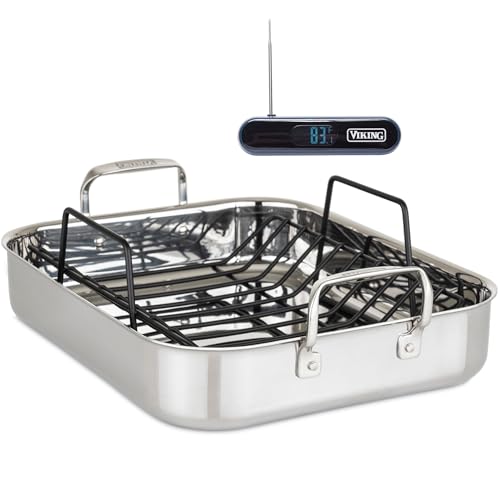
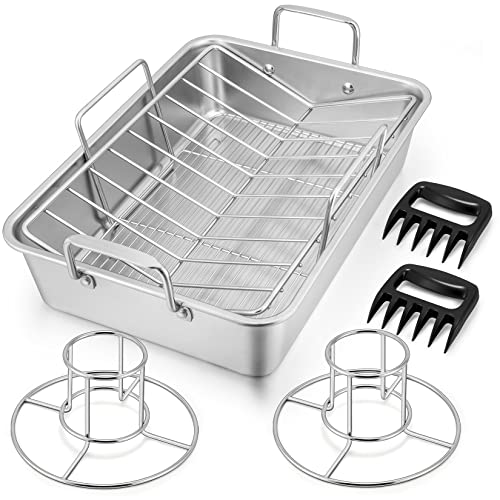
 By Emily Parker
Updated November 2026
The best roasting pan for prime rib roast is sturdy, roomy enough to hold the roast without crowding, and has a rack that lifts the meat off the pan floor so hot air circulates around it. A good pan helps you get an even crust, keeps drippings usable for gravy, and makes carving and cleanup easier. This guide walks through the factors that matter, how to match a pan to your roast, and the mistakes that cause the most trouble on the holiday table.
Why the Right Roasting Pan Matters for Prime Rib
Prime rib is a large, expensive cut, and it cooks slowly. A roast in the 4- to 7-pound range typically needs two to three hours at a moderate oven temperature, so the pan has to stay stable and even for the whole cook. A thin pan can warp at high heat, hot spots can scorch the bottom fat, and a pan without a rack can leave the underside of the roast sitting in its own juices. Choosing the right pan is less about brand names and more about size, material and how well it handles heat over a long cook.
Step 1: Measure Your Roast and Oven
Before you shop, measure two things: the length and width of your roast, and the interior width of your oven. A standard rib roast is often 4 to 6 inches thick at the widest point, and the pan should leave at least 2 inches of clearance on each side so heat can move around the meat. Many home ovens comfortably fit a pan up to about 18 inches long and 13 inches wide, but check your oven’s interior dimensions and the rack positions you plan to use.
- Roast weight and bone count (bone-in roasts need a little more room)
- Maximum pan length and width that fits your oven with the door closed
- Whether you need the pan to fit across two oven racks or on one
- Whether you plan to make gravy directly in the pan on the stovetop
Step 2: Choose the Right Material
Material affects heat distribution, durability and how the pan handles deglazing. Each option has trade-offs, and the best choice depends on how you cook.
| Material | Strengths | Things to watch |
|---|---|---|
| Stainless steel (clad or tri-ply) | Stable, resists warping, good for stovetop gravy, easy to clean | Heavier; cheaper versions can heat unevenly |
| Enameled cast iron | Holds heat well, even browning, attractive for serving | Very heavy; can chip if dropped; check whether it is oven-safe at your roasting temperature |
| Bare cast iron | Excellent heat retention, develops a good crust | Needs seasoning care; reactive with acidic drippings |
| Disposable aluminum | Inexpensive, no cleanup, convenient for large crowds | Thin and flexible; can bend under a heavy roast; not ideal for gravy from drippings |
For most home cooks, a heavy-gauge stainless or enameled pan with a fixed rack gives the most control. Disposable pans work when you need to free up dishwashing space, but lift the roast carefully and use two pans stacked for support if the pan feels flimsy.
Step 3: Check the Rack Design
A rack lifts the roast so heat reaches the bottom and drippings collect below. Look for these details:
- Rack height: About 1 inch of clearance is enough for most roasts. Too low and the bottom steams; too high and the roast can tip.
- Rack strength: The rack should support the full weight of the roast without bowing. Flat wire racks or sturdy V-shaped racks both work well.
- Handles: Sturdy, riveted handles make lifting a hot, heavy pan safer. Check that they stay cool enough to grip with an oven mitt.
- Removable rack: A removable rack makes it easier to baste, pour off drippings and clean the pan.
Step 4: Consider Depth and Drippings Capacity
Prime rib renders a substantial amount of fat, and the pan needs room to hold it without spilling. A depth of 2.5 to 3 inches is comfortable for most roasts. Shallower pans brown the top of the meat faster but may splatter in the oven. Deeper pans hold more drippings but can make it harder to reach the roast with a thermometer. If you plan to make au jus or gravy, choose a pan that can go on the stovetop over one or two burners, and confirm the manufacturer’s guidance on stovetop use.
Step 5: Plan Your Pan for the Full Timeline
A roasting pan is part of a larger holiday plan. If you are cooking a roast at a low temperature first and finishing with a high-heat sear, confirm that the pan can handle both stages. Bring the roast to room temperature for about an hour before it goes in, set the pan on a rack in the lower-middle of the oven, and insert a leave-in probe thermometer through the side of the meat rather than the bone. Your pan should be ready and preheated with the rack in place before the roast goes in. For broader timing and menu help, see Roasting Pan for Prime Rib: How to Choose and Use One (7 Steps).
- Season the roast the day before and refrigerate uncovered on a rack.
- Remove the roast from the fridge about one hour before cooking.
- Preheat the oven and place the pan and rack inside to warm.
- Set the roast on the rack, fat side up, and insert the thermometer.
- Roast to your target internal temperature, then rest the meat, loosely tented, for at least 20 to 30 minutes before carving.
- Use the drippings in the pan to make gravy on the stovetop.
Common Mistakes to Avoid
- Choosing a pan that is too small. A crowded roast steams instead of browning. Measure before you buy.
- Skipping the rack. Without it, the bottom of the roast sits in fat and loses its crust.
- Using a flimsy disposable pan alone. Double up or move the roast to a serving platter carefully.
- Putting a cold pan in a hot oven. Rapid temperature change can warp thin metal. Let the pan warm gradually.
- Assuming every enameled pan is safe for high heat. Check the maximum temperature in the manufacturer’s care instructions.
- Deglazing a hot pan with cold liquid. Let the pan cool slightly before adding stock to avoid warping or spattering.
Tips for Better Results
- Use a pan with light-colored interior surfaces so you can judge the color of the drippings.
- Keep a second baking sheet nearby to catch any spills from the pan.
- If your roast is very large, check whether the pan can be placed across two oven racks for even heat.
- Cut the bones off and tie them back on before roasting if you want a tidier pan and easier carving.
- For a deeper look at rack and pan pairings, read 3 Best Prime Rib Roasting Pans: Picks for Holiday Roasts (2026).
Recommended gear
These supplies help the roasting pan do its job well. Choose sizes and models that match your oven and roast.
- Leave-in probe thermometer: A wired probe with an external display lets you track the roast without opening the oven door. Choose one with an alarm for your target temperature. View on Amazon
- Heavy-duty oven mitts or silicone gloves: Prime rib pans and racks get very hot, and a secure grip prevents spills. View on Amazon
- Roasting rack for the pan: A replacement or extra rack can make a shallow pan usable for larger roasts. Check the rack dimensions against your pan. View on Amazon
FAQ
What size roasting pan do I need for a prime rib roast?
For a 4- to 7-pound roast, look for a pan roughly 14 to 17 inches long and 10 to 13 inches wide, with at least 2 inches of clearance around the meat. Measure your roast and oven first, since bone-in roasts need more room than boneless ones.
Do I need a rack in the roasting pan?
Yes, in most cases. A rack keeps the bottom of the roast out of the drippings so it browns evenly and does not steam. Without a rack, the underside can turn soft and greasy.
Can I use a disposable aluminum pan for prime rib?
You can, but disposable pans are thin and can bend under a heavy roast. Stack two pans for extra stability, lift carefully, and avoid making stovetop gravy directly in them.
Is enameled cast iron good for roasting prime rib?
It holds heat well and browns evenly, but it is very heavy. Confirm the maximum oven temperature in the care guide, and be careful lifting the pan out of the oven.
Should I cover the roasting pan while the roast cooks?
Usually no. An uncovered pan lets the surface of the roast brown and form a crust. You can loosely tent the roast with foil during resting, but keep the pan itself uncovered for roasting.
How deep should a roasting pan be for prime rib?
A depth of about 2.5 to 3 inches is comfortable for most roasts. It holds the drippings without splattering and leaves room to insert a thermometer.
Can I make gravy in the same roasting pan?
Often yes, if the pan is stainless or enameled and labeled for stovetop use. Pour off most of the fat, set the pan over one or two burners on medium heat, and deglaze with stock or wine. Check the manufacturer’s guidance before using high heat on the stovetop.
Should I consult a professional about food safety for a large roast?
For general roasting, following a tested internal temperature and resting guideline is enough. If you have food safety concerns, such as serving guests with compromised immune systems, consult a food safety professional or your local health department.
Conclusion
The best roasting pan for prime rib roast is one that fits your roast and oven, holds heat evenly, and includes a rack that lifts the meat off the pan floor. Measure before you buy, choose a material that suits how you cook and make gravy, and plan the pan into your full holiday timeline. With the right pan and a reliable thermometer, you can expect a well-browned, evenly cooked roast and drippings ready for gravy.
Related reading
- Roasting Pan for Rib Roast: A Practical Guide (2026)
- Roasting Pan Cast Iron: 7 Best Picks for Turkey and Roasts in 2026
- Enameled Roasting Pan with Lid: 6 Best Picks for Turkey and Roasts (2026)
- Disposable Roasting Pan with Rack: 5 Best Picks for Turkey and Roasts
Ready to choose one?
About Emily Parker
Emily Parker is part of our editorial team and reviews and edits our holiday cooking & baking guides, checking product details against manufacturer specifications and owner feedback.